
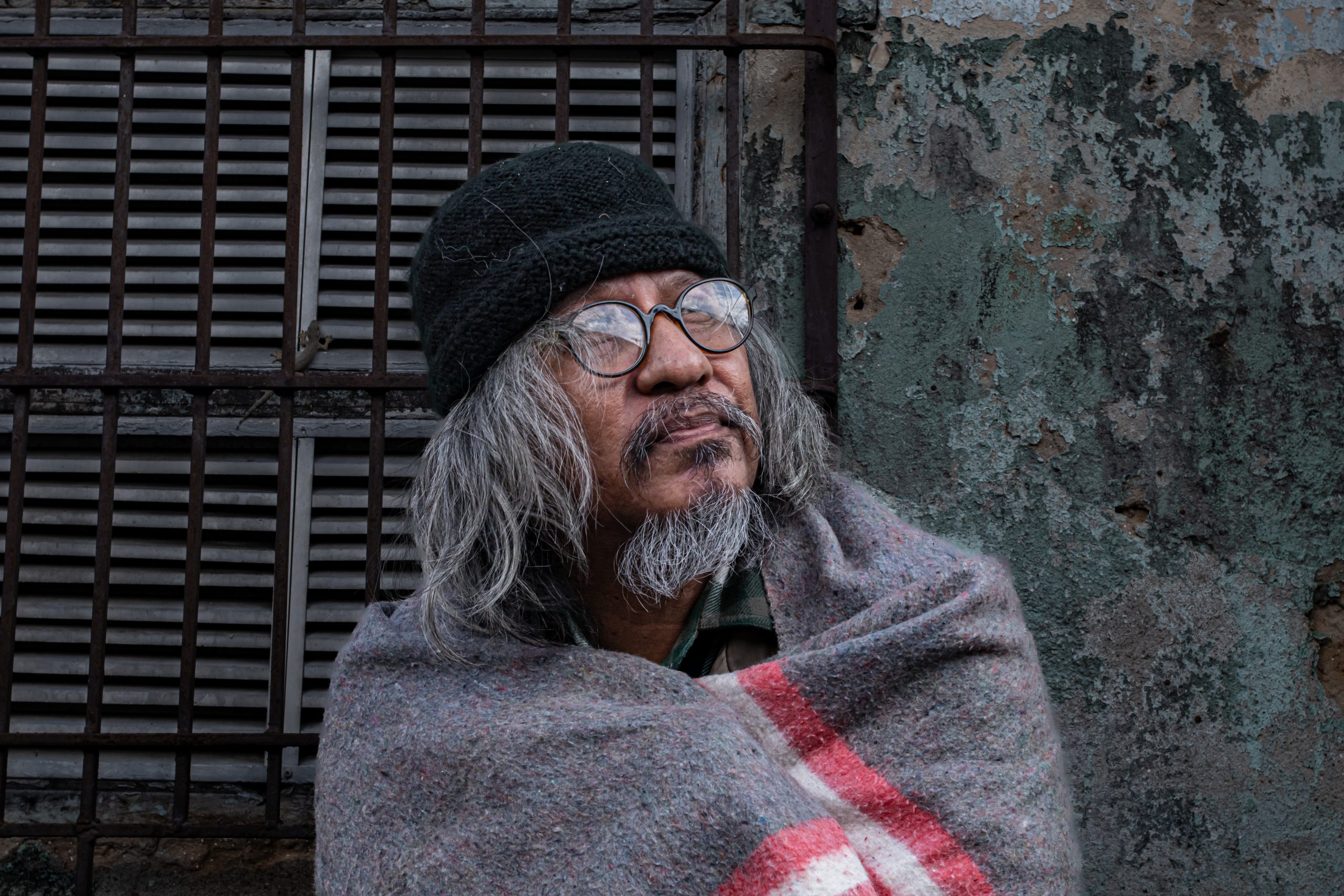
Dr. Shayan Rab is a psychiatrist and the Los Angeles Department of Mental Health’s first street psychiatrist. Since 2019, he has worked directly with people experiencing homelessness, delivering psychiatric care in the field while helping build the Homeless Outreach & Mobile Engagement (HOME) Team, an integrated, multidisciplinary model that combines psychiatry, medicine, and housing support.
In this conversation, Dr. Rab reflects on his early experiences in street psychiatry, the role access to complete, accurate, and integrated data has to do with whole person care, and what it takes to effectively support people who are unhoused.
Question: You were the Department of Mental Health’s first street psychiatrist. What was that like starting out?
There was no rulebook. There was no training. Street psychiatry is a practice that developed in the field; people learning how to do the work by doing it. I started in 2019 with just a commitment to helping people who were unhoused and trying to make a difference. On day one, I went out with my team and saw someone on the street who appeared to have schizophrenia. They couldn’t give me their history. They couldn’t tell me what medications they’d tried, what medical problems they had or anything recent.
They were poor historians and were experiencing psychosis, and there was very limited information in the medical records we had access to through an EMR. These are people who are chronically underserved. Most of their care had happened through past hospitalizations, and I didn’t have access to that information.
Question: Before using LANES in your day-to-day, what did care look like?
I would either do a chart review beforehand with whatever information I had, then go see the patient. But if they told me something about their history, I couldn’t corroborate it beyond what was already in my immediate EMR. I was relying on reports from someone who was deeply impaired, and that information might not be accurate. It needed verification, but there was no way to do that.
It was especially problematic if I had to see someone on a whim: “Hey, this person isn’t doing well, can you see them?” I hadn’t chart-reviewed. I was walking in completely blind. As a doctor, that’s terrifying.
What was it like to use a health information exchange for the first time, and how does it help you coordinate care today?
Once I got connected and opened our health information exchange (LANES), I could suddenly see past medical history, hospitalizations, diagnoses, and medical workups. I could walk onto the street and actually educate the patient about their own history and work with them.
For unhoused patients who bounce between multiple hospitals and systems, their history lives across many EMRs. You need a single place that gives you longitudinal history. That’s what LANES did for me. It was transformative.
Today, it helps in many ways. First, diagnostic clarity: When you’re working with someone on the street, they’re not in a controlled environment. How do you know if it’s schizophrenia, substance-induced symptoms, or a medical condition? You often don’t.
By looking through records, I can understand their history, how they’ve presented before, and what that means now. That helps me decide how to direct care—including who needs to be at the table and what services are required.
The other big piece is identifying who else is involved in their care. With LANES, you can figure out who the care team is and create secure communication with everyone involved. That gives you a real space to coordinate care.
Question: Can you walk through a real-world example of how you use data when working with the HOME Team?
I meet a patient, build rapport, start an evaluation, and draw labs—we do mobile phlebotomy in the field. If I see something concerning, like very low hemoglobin, I ask: is this new or chronic? I’ll check LANES to see trends over time.
If it’s acute, I call my street medicine partners and bring them into the care plan. If I see they’re connected to an FQHC, I’ll call that clinic and say, “I found your patient—this is what’s going on.”
Ultimately, you have to triangulate. Through a health information exchange, it lets you identify who’s involved, pull them in, or add someone new if there’s a gap.
Question: What impact have you seen from this approach?
HOME Team is focused on breaking revolving doors (in and out of hospitals or health systems). High utilization exists because people don’t collaborate or communicate—that’s the only reason.
With health information exchange event notifications, we know immediately if one of our patients shows up in a hospital. We go there, tell the hospital we’re their outpatient provider, and collaborate on discharge planning.
We’ve studied outcomes. Before HOME Team involvement, 12-month readmission rates were almost 100%. After, they dropped to 50% or less. That’s dramatic.
It works because we find people wherever they are, collaborate across systems, and create a runway from hospital to outpatient care and housing.
Question: What are your thoughts on sharing behavioral health information alongside physical health data?
Information is key. LANES gives providers what they need to collaborate and recruit the right people to the table. It’s impossible to treat physical health without mental health information. You can’t separate the two—they’re part of the same person.
Hospitals often don’t know what’s happening outside their walls, and patients are too impaired to explain it. When I’m on the street, I’m often the only provider someone has. I need all the information to make sure they don’t die out there.
A health information exchange gives me that window into the outside world.
Question: What do you wish more people understood about your work?
I went into this work because I realized during residency that I was caring for many unhoused patients—and I had zero training to do it well. There was no education on how housing works, how to connect with people on the street, or how to create real care plans for this population.
What I’m proud of is that HOME Team built a program that shows real, tangible success. It’s become a nationwide model. We’ve also created residency rotations so new doctors can learn this work firsthand. If you only stay in brick-and-mortar facilities, you won’t understand the reality outside.
Helping people who are unhoused requires a shared understanding across the entire system—providers, policymakers, educators, and business owners. When that ecosystem exists, people get better.
Learn more about the HOME Team, and explore how LANES support behavioral health providers and whole person care.